Product
NoFlare DDoS Protector
NoFlare DDoS Protector defends websites from DDoS attacks with real-time detection, BGP-based protection and traffic filtering, keeping your services available under attack.

A DDoS attack turns your own traffic capacity against you: service degrades, customers can't reach you, and revenue stops. NoFlare DDoS Protector is built to absorb that impact, keeping your website and infrastructure available even under large-scale attack.
Why businesses choose NoFlare
Availability is not an IT metric — it is the price of admission for doing business online. When a DDoS attack succeeds, the cost shows up in lost transactions, broken SLAs, and support queues, long before it shows up in an infrastructure ticket. NoFlare is built around that reality: protection that works at network scale, with no single point of failure of its own, so that when traffic turns hostile, your customers notice nothing.
How it protects your business
- Real-time detection — continuously monitors traffic patterns and identifies malicious activity the moment it appears.
- Rate limiting and filtering — applies fair resource allocation and blocks unauthorized or harmful requests at the network level.
- Cluster-mode high availability — distributes load across nodes so there is no single point of failure.
- BGP-based protection — reroutes attack traffic through scrubbing centers, neutralizing large-scale floods before they reach your infrastructure.
How it works
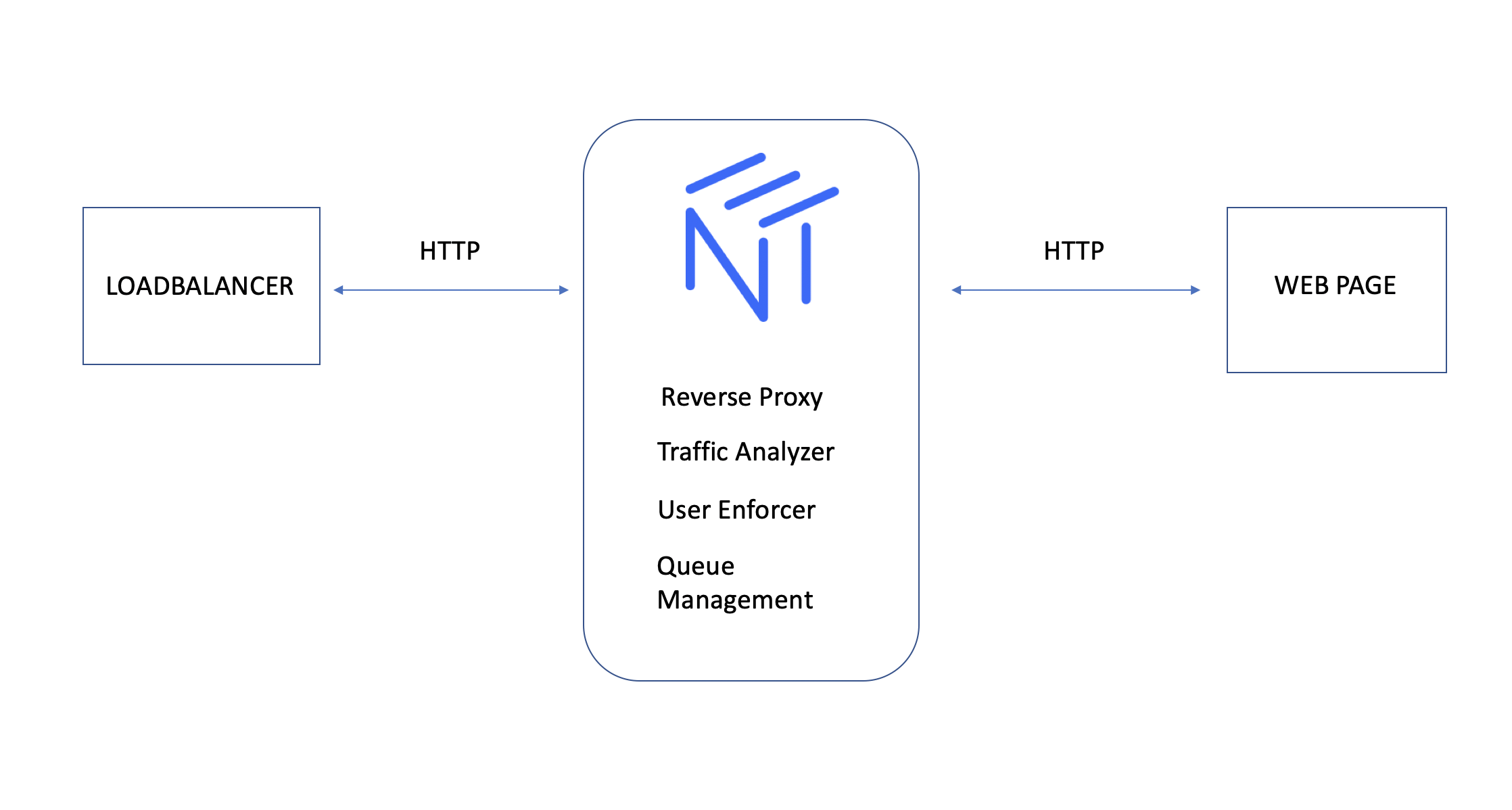
NoFlare watches the traffic arriving at your infrastructure in real time and compares it against established behavioral baselines. When an attack pattern appears, filtering and rate limiting engage immediately on the affected flows; for large-scale floods, BGP routing shifts the traffic toward scrubbing capacity where it is cleaned before reaching your origin. The protection runs in cluster mode, so the defense itself scales with the attack and has no single point of failure.
Deployment and operations
NoFlare integrates into existing networks for quick deployment — your team keeps its current topology, and the protector slots in front of the services it defends. Cluster mode provides the redundancy your SLAs require, and continuous monitoring gives your operations team 24/7 coverage with the visibility to prove what happened when an attack occurs.
If you want to see NoFlare in front of your own traffic, talk to us — we can outline a deployment for your environment through our contact page.